Sacred Sites and Sacred Identities
Nalanda and its vicinity (c.600-1200)


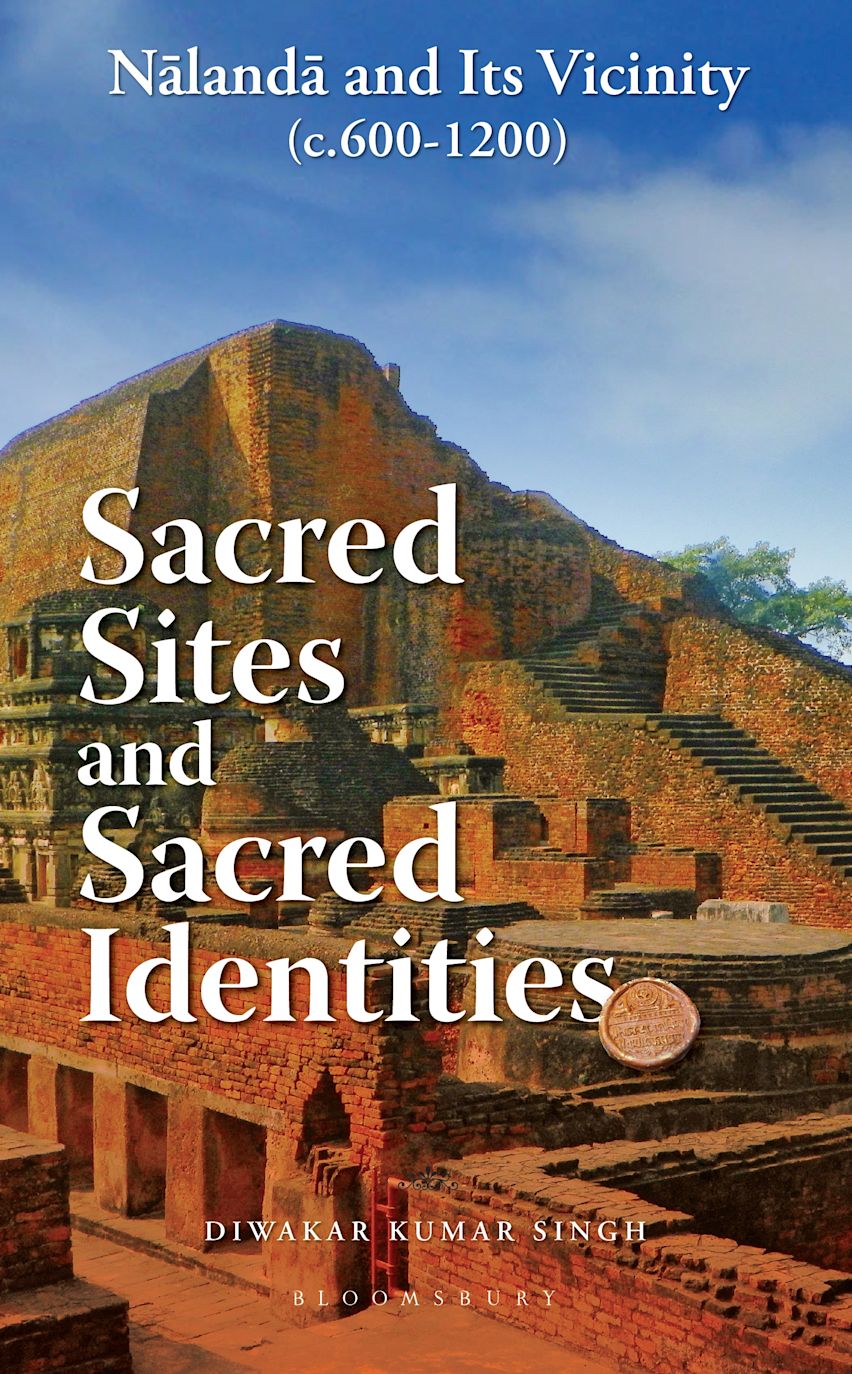
Sacred Sites and Sacred Identities
Nalanda and its vicinity (c.600-1200)
For information on how we process your data, read our Privacy Policy
Description
This book encapsulates the various historical contexts within which Nalanda assumed its significance and attained its mahavihara (mega-monastery) status. By examining sources ranging from textual to archaeological it reveals the history of Nalanda and its remarkable continuity with perceptible intellectual paraphernalia for which it became famous over the period. Contrary to the exposition of a pan-Indian decline of Buddhism, evidence gleaned from the various quarters from Nalanda amply demonstrate that monasteries were in a flourishing state in the entire region (i.e. Nalanda and its wider geographical landscape) and render any simple and conventional explanations of the decline of Buddhism in this period problematic. Thus, the book attempts to understand the dynamics of a complex religious process with the focus on this monastery and its religious domain. The interpretation is largely based upon the material records generated in the course of the excavations at Nalanda.
Nalanda as a site in archaeological and historical parlance connotes a Buddhist monastic establishment which grew up under the patronage of both royal as well as non-royal categories. The incomplete excavation of this site has revealed a range of artifacts such as seals, inscriptions, and images attesting a larger monastic set up which underwent varied religious experiences. Primarily a Buddhist site, Nalanda bears a remarkable presence of other religious traditions such as Brahmanism and Jainism. The evidence of Brahmanical pantheons, symbols and other ritual entities presents a fascinating case study to understand and extrapolate the diversity of religious space of this monastic site. There is sufficient archaeological data which suggests that the monastery witnessed a conjugation of different religious and ideological streams. The book will make an important intervention in existing theoretical model that explains the decline of Buddhism.
Table of Contents
Acknowledgements
Introduction
Chapter 1: Nalanda: From a forgotten place to an archeological site
Chapter 2: Nalanda and its vicinity
Chapter 3: The Nalanda monastic Institution and forms of patronage
Chapter 4: Monastic religious space: Images, cults and representation
Conclusion
Bibliography
About the Author
Index
Product details
| Published | 30 May 2025 |
|---|---|
| Format | Hardback |
| Edition | 1st |
| Extent | 296 |
| ISBN | 9789356408494 |
| Imprint | Bloomsbury Academic India |
| Dimensions | 216 x 135 mm |
| Publisher | Bloomsbury Publishing India Pvt. Ltd |
Related Titles