
Buying pre-order items
Your pre-order item will usually be processed for shipping shortly before the publication date.
Payment for this pre-order will be taken when the item becomes available
- Delivery and returns info
-
Free UK delivery on orders £30 or over
Description
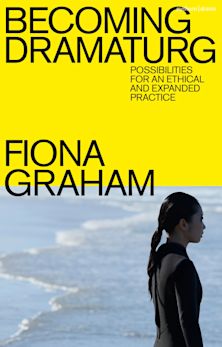
How do you explain the amorphous, complex discipline that is dramaturgy?
This book provides the answer to that conundrum and offers a simple, effective, visual method using concrete examples that takes you from being a beginner in dramaturgy to a confident practitioner in the time it takes to read this book.
Drawing on the author's tried-and-tested dramaturgical practice with text-based theatre, built up over his 30 year-long career to date, the book concentrates on three specific areas as a way of better understanding dramaturgy and the dramaturg's function within that, offering a 360-degree view of each:
Roles – the multitude of roles a dramaturg might be expected to play during a career
Script Development – the areas you need to understand to get the best from a new script
Production – the preparation, rehearsal and performance aspects of a new production
By exploring different perspectives in each of these areas, this book completely demystifies the practice of dramaturgy, offering a clear, practical, and accessible method for working as a dramaturg.
Whether you are a seasoned dramaturg or entirely new to dramaturgy, this book provides a method by which to review, revise and renew your own practice.
Table of Contents
Introduction - There's a Hole in My Bucket
PART ONE – THE BASICS
1.1 Dramaturgy and Dramaturgs
1 What is dramaturgy?
2 What is a dramaturg?
3 What dies a dramaturg do?
4 Is it dramaturg or dramaturge?
5 What does a dramaturg need to know?
6 Do you need strong opinions to be a dramaturg?
7 What type of person makes a good dramaturg?
8 How long has dramaturgy been around?
9 Is a dramaturg the same as a literary manager?
10 What is the difference between a freelance dramaturg and a company dramaturg?
11 Is a dramaturg an artist?
12 Does a script-orientated dramaturg also need to be a playwright?
13 Does a dramaturg need to be an academic?
14 Does every dramaturg need to know about classical drama?
15 Does theatre really need dramaturgs?
16 How do you become a dramaturg?
17 Is it possible to earn a living as a dramaturg?
18 Are there any other jobs a dramaturg might need to do?
19 What other careers can dramaturgy lead to?
20 What is the hardest thing about being a dramaturg?
21 What is the best thing about being a dramaturg?
1.2 Basic Elements of Dramaturgy
Dramatic Structure
Character
Use of Language
Nature of Engagement / Theatricality
PART TWO - THE 360-DEGREE METHOD
2.1 Outline of the 360-Degree Method
2.2 Reading 360
2.3 New Writing 360
2.4 Classics 360
2.5 Musicals 360
2.6 Devised 360
PART THREE - ADVANCED DRAMATURGY
3.1 A Hermeneutic Approach
Art or Science
Hermeneutics
3.2 The Game
Basics
Taste
Subjectivity v Objectivity
Reason
Rationalism v Empiricism
Intellect v Instinct
Truth
Metaphysics & Ontology
His-story. Her-story. Their-story. The-story. This-story. That-story.
Politics & Society
The Player
Teamwork
The G.O.A.T.
APPENDICES
Appendix 1 Roles 360
1 Polymath
2 Critic
3 Audience Surrogate
4 Administrator
5 Advocate
6 Facilitator
7 Curator
8 Public Speaker
9 Legal Adviser
10 Diplomat
11 Director
12 Programmer
13 Researcher
14 Marketing copywriter
15 Historian
16 Therapist
17 Treasure hunter
18 Workshop leader
19 Financial advisor
20 Expert
Appendix 2 Reading
Appendix 3 Aphorisms
Product details

| Published | 01 Apr 2027 |
|---|---|
| Format | Hardback |
| Edition | 1st |
| Pages | 272 |
| ISBN | 9781350509610 |
| Imprint | Methuen Drama |
| Illustrations | 1 b&w diagram |
| Dimensions | 216 x 138 mm |
| Publisher | Bloomsbury Publishing |
Related Titles