
Buying pre-order items
Ebook and audiobook pre-orders will be delivered on the publication date.
Payment for this pre-order will be taken when the item becomes available
Description
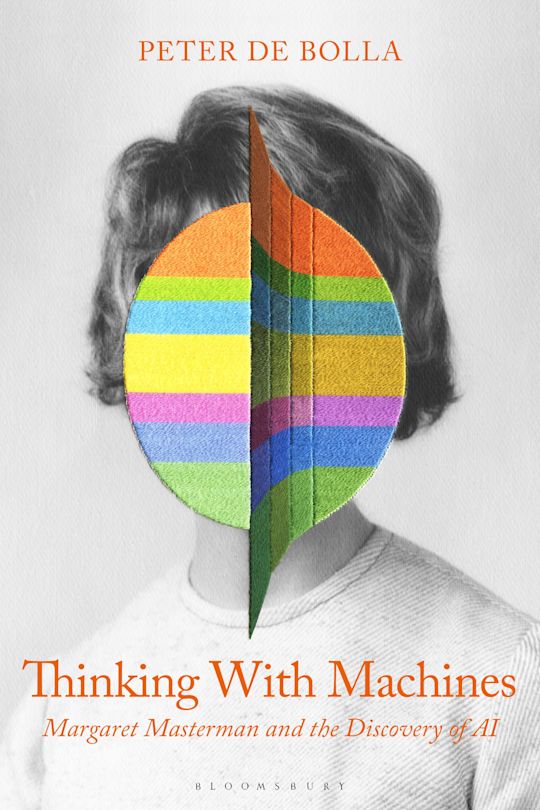
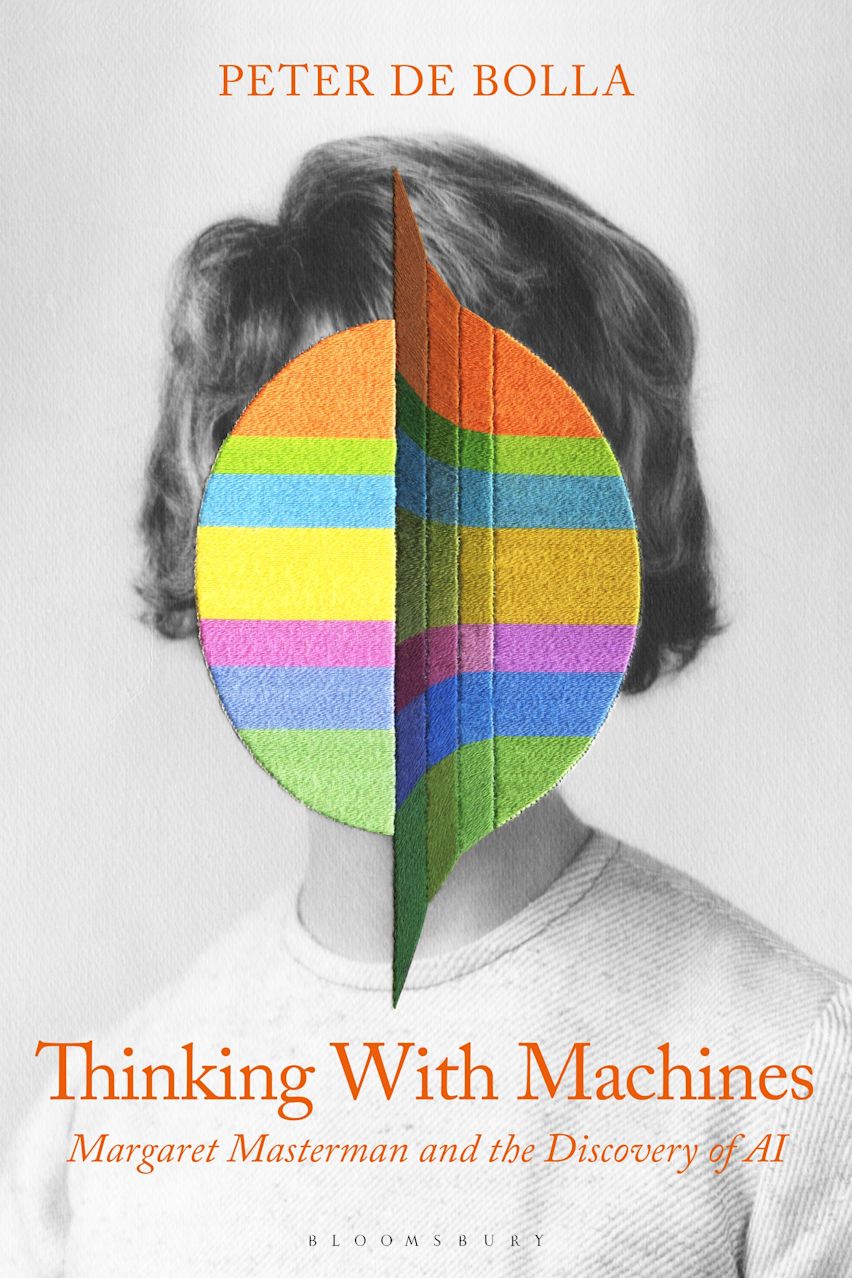
Sixty-five years ago a small group of maverick thinkers gathered in a converted Buddhist museum on the outskirts of Cambridge, convinced that language held the key to unlocking artificial intelligence. Their leader was the extraordinary and eccentric Margaret Masterman – religious devotee, linguist, logician, philosopher, self-made computer scientist, and forgotten prophet of AI.
With the discovery of an archive that had remained unopened for nearly forty years, Peter de Bolla has pieced together the remarkable story of Masterman's creation and direction of the Cambridge Language Research Unit (CLRU). Working on the fringes of the university, dismissed as an amateur and constrained by structural sexism, Margaret Masterman, who took dictation from Wittgenstein, led the CLRU to the discovery of AI as they worked at an extraordinary pace to crack the problem of machine translation. Taking Turing's theoretical proposal of an 'electronic brain' and running furiously with it, she and her colleagues built the first machine that could think - a machine capable of engaging with human minds, and even, in Masterman's prophesised future, of doing philosophy alongside them.
Her audacious claim that a machine could generate meaning, not merely manipulate symbols made – and still makes – her both a prophetic voice and a heretic. Blending biography, intellectual history, the drama of scientific revolution, and the exhilarating discovery of the most powerful technology of the twenty-first century, AI, this book reveals how Masterman and her collaborators – from philosophers, linguists and botanists to quantum theorists – came to formulate a theory of language and mind that we are only now beginning to see in action in the large language models that shape our world today.
Accessibility Information
Additional accessibility information
- PDF/UA-2, 1.4
- accessibility@bloomsbury.com
Hazards
The publication contains no hazards
Support for non-visual reading
Has alternative text descriptions for images
Navigation
- Page list to go to pages from the print source version
- Elements such as headings, tables, etc for structured navigation
- All or substantially all textual matter is arranged in a single logical reading order
Table of Contents
1. 'One day it will be possible to do think with machines'
2. 'Learning to generalize freely and fancifully': Masterman at Newnham, 1929 -1933
3. From theatre to commune: 1933-1951
4. Thinking machines: 1947-1952
5. The foundation of the CLRU: 1953 – 1956
6. Testing to destruction: 1957
7. The mechanization of thought processes: 1958 – 1961
8. Freeing the mind: 1962
9. 'I don't have words, I have phrases': The Sands Hotel, Las Vegas, 1965
10. 'Language is a dynamic corporate memory device': The breakthrough of 1968
11. 'Put on my tomb “This is what she was trying for”'
Appendix I: Timeline of early MT research.
Appendix II: Significant papers and publications of Margaret Masterman.
Product details

| Published | Oct 15 2026 |
|---|---|
| Format | Ebook (PDF) |
| Edition | 1st |
| Pages | 256 |
| ISBN | 9781350643000 |
| Imprint | Bloomsbury Academic |
| Publisher | Bloomsbury Publishing |
Related Titles