- Home
- ACADEMIC
- Education
- Education - Other
- The Myth and Reality of No Child Left Behind
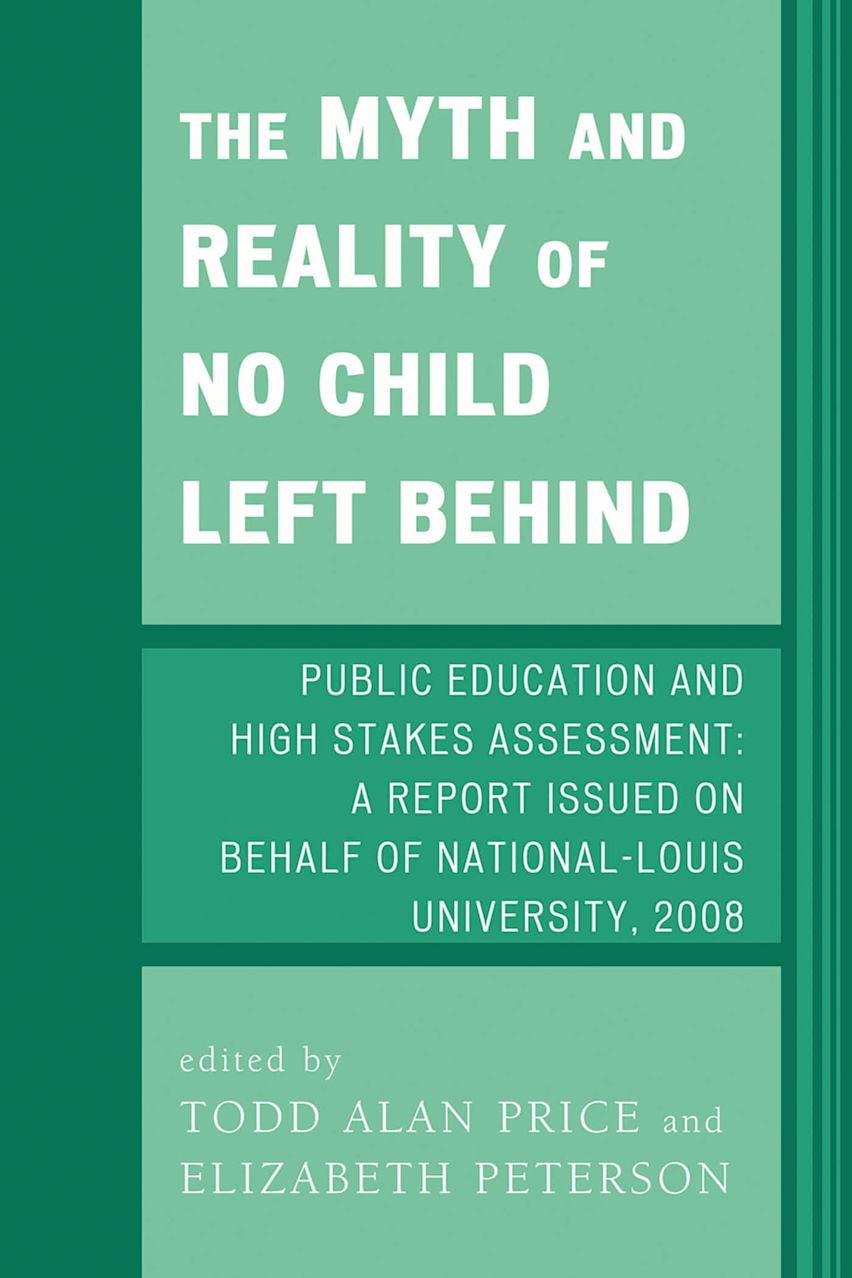
The Myth and Reality of No Child Left Behind
Public Education and High Stakes Assessment
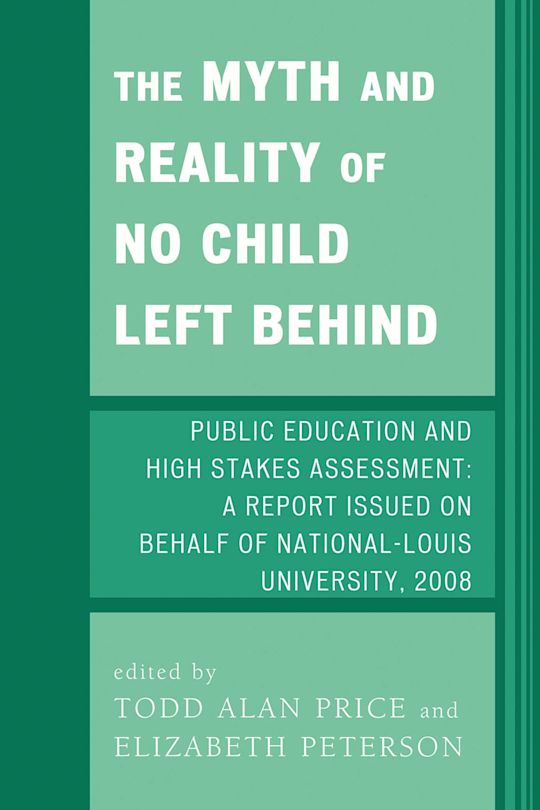
Todd Alan Price (Anthology Editor) , Elizabeth Peterson (Anthology Editor) , Laura Bauer (Contributor) , Alice Bicudo (Contributor) , Martha Casazza (Contributor) , John W. Hunt (Contributor) , Virginia Jagla (Contributor) , James Kusch (Contributor) , Kristin Lems (Contributor) , Leah D. Miller (Contributor) , Anne Reichel (Contributor) , Nancy Stone (Contributor)
The Myth and Reality of No Child Left Behind
Public Education and High Stakes Assessment

Todd Alan Price (Anthology Editor) , Elizabeth Peterson (Anthology Editor) , Laura Bauer (Contributor) , Alice Bicudo (Contributor) , Martha Casazza (Contributor) , John W. Hunt (Contributor) , Virginia Jagla (Contributor) , James Kusch (Contributor) , Kristin Lems (Contributor) , Leah D. Miller (Contributor) , Anne Reichel (Contributor) , Nancy Stone (Contributor)
This product is usually dispatched within 3 days
- Delivery and returns info
-
Free CA delivery on orders $40 or over
You must sign in to add this item to your wishlist. Please sign in or create an account
Description
Students of education are aware of the story of public education, of legendary figures like Horace Mann riding from district to district trying to improve the American school by establishing a common school fund and developing teacher-training programs. Those who followed worked hard to broaden the mission and refine the institution. While advancing the distribution of textbooks, developing curriculum materials and employing testing tools, even as early as 1845, standardized testing was used to see if it all worked. Advocates used the Elementary and Secondary Education Act (ESEA) of 1965 to make accessible to all an education of worth for social advancement.
Yet today's No Child Left Behind Act, signed in 2002 is, ironically so, a reform driven not by the advocates, but by public education's most ardent detractors. NCLB appears to be an attempt to change the public education system fundamentally, from the perspective that it is broken, its mission in need of radical revision.
Table of Contents
Chapter 2 2. The Chicken Wins: The History of Assessment
Chapter 3 3. ETS and the American Dream
Chapter 4 4. Fuzzy Math: Missing Tests, Missing Students, Missing the Mark
Chapter 5 5. Drop Out or Pushed Out? Who's Counted Out in High Stakes Testing
Chapter 6 6. English Language Learners in an Era of NCLB
Chapter 7 7. Who is Being Left Behind?
Chapter 8 8. Public Education and Privatization in the Ownership Society
Chapter 9 9. Hawaii, the Fiftieth State: A Case Study of the Plantation Blues
Chapter 10 10. The Modification of School Improvement and Staff Development Efforts in Response to the Failure to Make Adequate Yearly Progress
Chapter 11 11. Unintended Consequences: The Teacher's Story
Chapter 12 12. A Ray of Hope: Service Learning Insures Success for All
Product details
| Published | Oct 16 2008 |
|---|---|
| Format | Paperback |
| Edition | 1st |
| Pages | 172 |
| ISBN | 9780761843146 |
| Imprint | University Press of America |
| Dimensions | 232 x 154 mm |
| Publisher | Bloomsbury Publishing |
About the contributors
Reviews
-
This book shows how able and committed teachers who regard their profession as a calling are tragically transformed into technocrats fulfilling federal reform imperatives. This inside picture of the terrible price teachers pay to work in the system imposed by NCLB should be a call to action.
Susan Ohanian, educator, activist, and author of "What Happened to Recess and Why Are Our Children Struggling in Kindergarten?"
-
Dr. Todd Alan Price and his colleagues contextualize the contemporary state of American public education, drawing upon its deep historical roots and philosophical underpinnings. This framework enables the reader to understand the turmoil engendered by current policy waves. These essays pose insightful questions about whether we can build on our historical strengths to meet modern-day challenges of the global era.
Kathleen Sullivan-Brown, Executive Director of the Illinois Education Research Council and Associate Professor of Educational Leadership and Policy Studi
-
Price and Peterson's volume should be required reading for policy makers nationwide, as it asks important questions that need answering before NCLB comes up for reauthorization. What is intelligence and how should it be measured? Who benefits from measuring intelligence in specific ways? How has NCLB impacted students, teachers, administrators and communities? I am particularly impressed with the historical and philosophical analysis contained in the early chapters, and I am equally grateful for the qualitative and quantitative work in the volume's later half. In an increasingly standardized world, it's important to have critical scholarship that approaches NCLB from multiple angles. This is a must read for everyone concerned with the future of public education and by default, our democratic republic. In an ideal world, that would be everyone.
Philip Kovacs, former high school English teacher, Assistant Professor at the University of Alabama in Huntsville, and a contributor to the Edu