
Multilingualism in Medieval and Early Modern Europe
Areas of Contact and Overlap

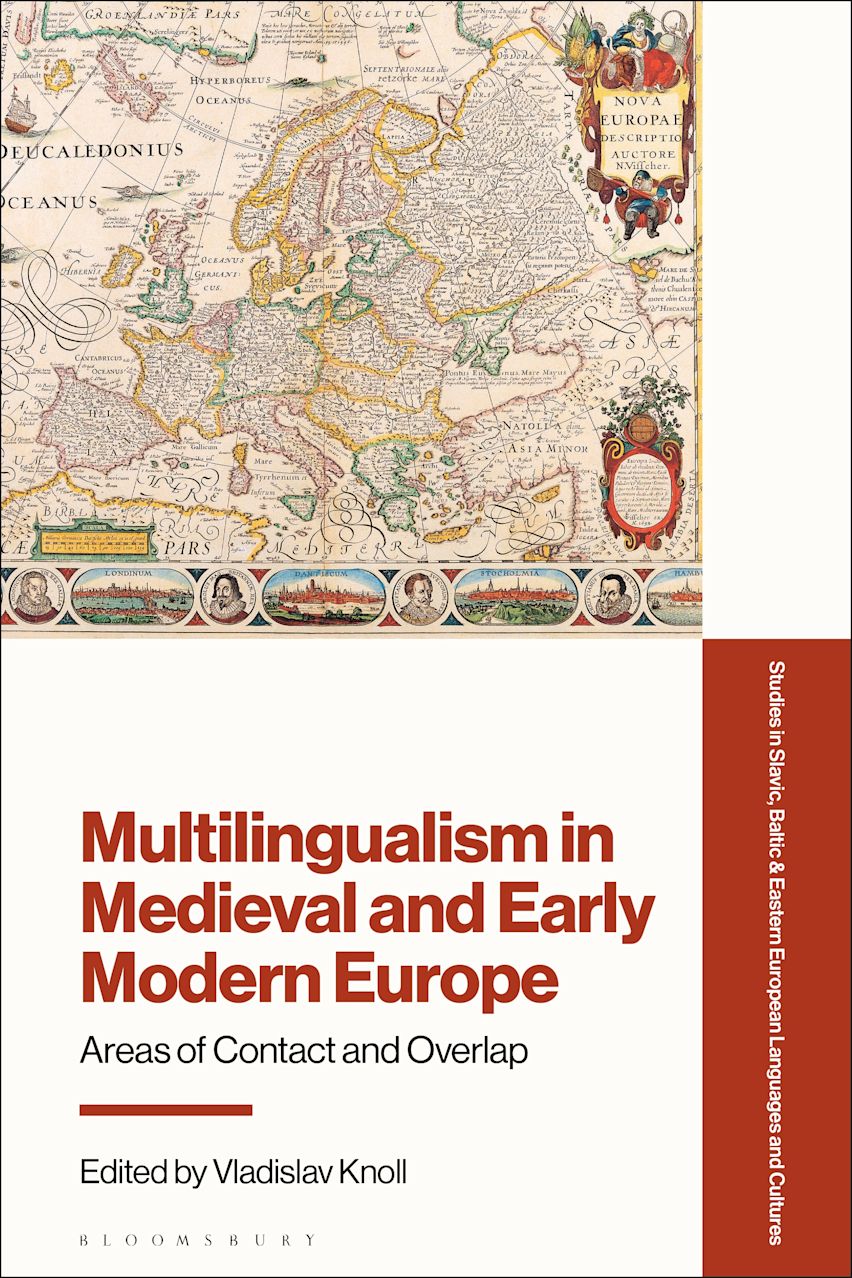
Multilingualism in Medieval and Early Modern Europe
Areas of Contact and Overlap
Quantity
Pre-order. Available Dec 10 2026
Buying pre-order items
Ebook and audiobook pre-orders will be delivered on the publication date.
$136.76
RRP $170.95
Website price saving $34.19 (20%)
Payment for this pre-order will be taken when the item becomes available
Description
Accessibility Information
Additional accessibility information
- PDF/UA-2, 1.4
- accessibility@bloomsbury.com
Hazards
The publication contains no hazards
Support for non-visual reading
Has alternative text descriptions for images
Navigation
- Page list to go to pages from the print source version
- Elements such as headings, tables, etc for structured navigation
- All or substantially all textual matter is arranged in a single logical reading order
Product details

| Published | Dec 10 2026 |
|---|---|
| Format | Ebook (PDF) |
| Edition | 1st |
| Pages | 320 |
| ISBN | 9798216258537 |
| Imprint | Bloomsbury Academic |
| Illustrations | 20 b/w photos |
| Series | Studies in Slavic, Baltic, and Eastern European Languages and Cultures |
| Publisher | Bloomsbury Publishing |
Reviews
Related Titles


$131.85
RRP $146.50



$144.85
RRP $160.95





$131.85
RRP $146.50
$144.85
RRP $160.95