Esotericism in East Asia
Cultural Interpretation and Politics
Chienhui Chuang (Anthology Editor) , Sangyun Han (Anthology Editor) , Julian Strube (Anthology Editor)
- Open Access
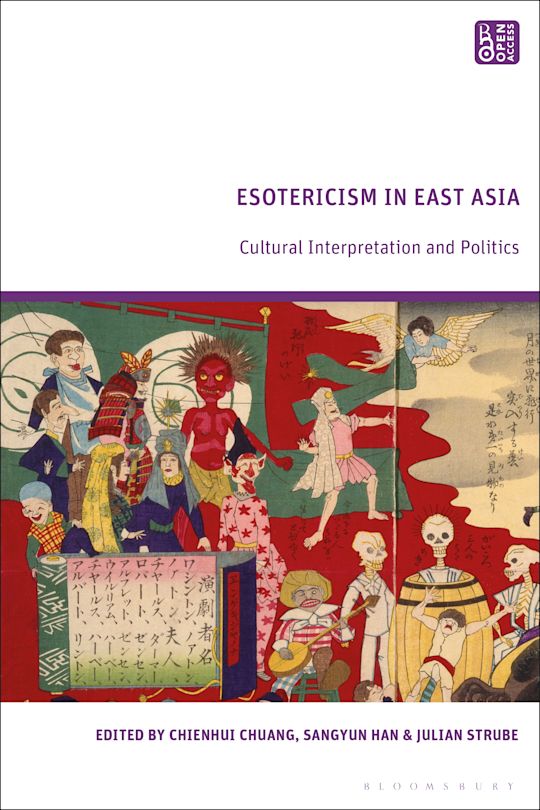

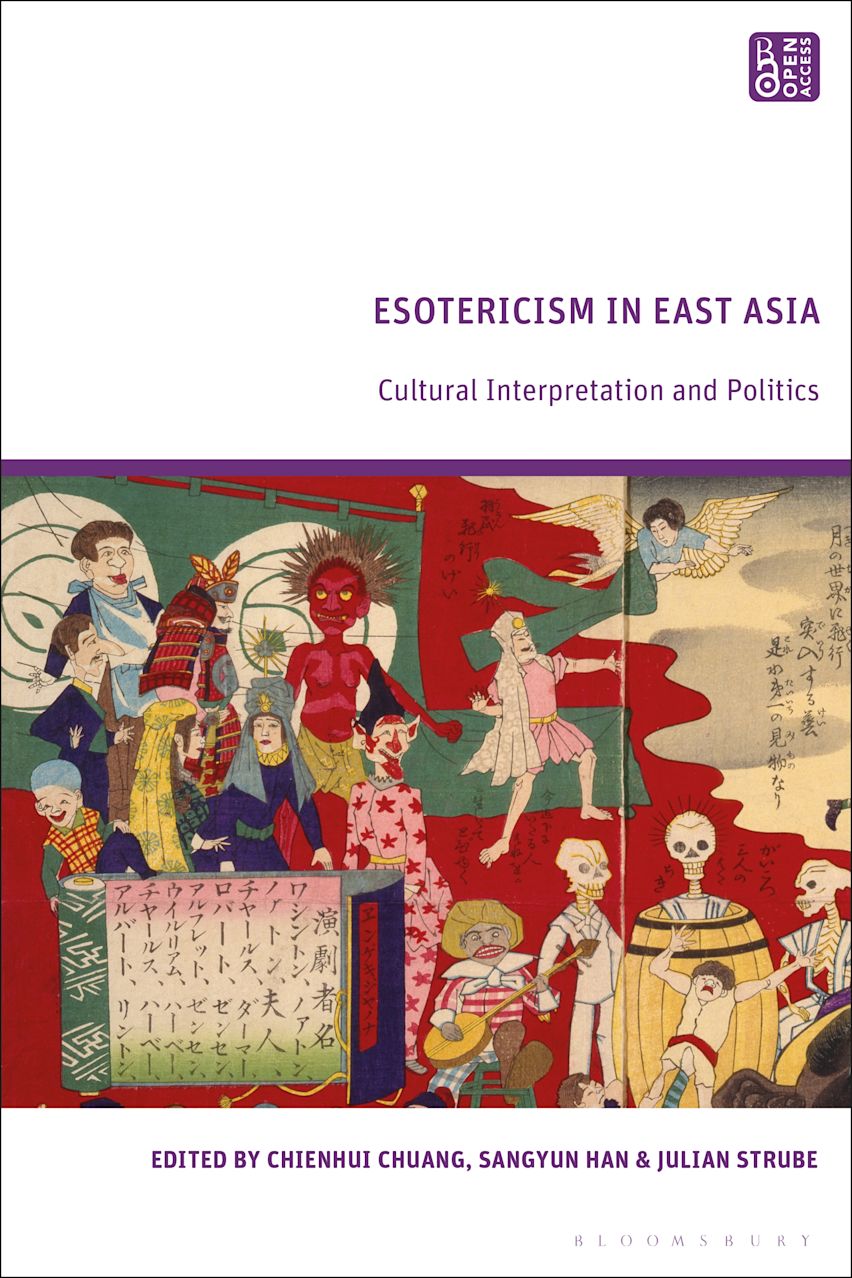
Esotericism in East Asia
Cultural Interpretation and Politics
Chienhui Chuang (Anthology Editor) , Sangyun Han (Anthology Editor) , Julian Strube (Anthology Editor)
- Open Access
Buying pre-order items
Your pre-order item will usually be processed for shipping shortly before the publication date.
Payment for this pre-order will be taken when the item becomes available
- Delivery and returns info
-
Free CA delivery on orders $40 or over
Description
This pioneering open access book offers a new take on esotericism by centering the often-overlooked contributions of East Asian thinkers to the development of this field of knowledge. The intellectual history of esotericism has long revolved around Western ideas about the East. This book tells a more complex and accurate story that traces global exchanges of ideas across East and West.
Esotericism in East Asia critically examines how and why the language of 'esotericism' has become so ubiquitous in scholarship on Asian religious ideas and practices. It highlights the role of interactions between European and Asian scholars since the 16th century to show that Asian thinkers and their local contexts have crucially shaped our understanding of esotericism. With contributions focusing on a range of contexts in Japan and China, from Buddhism and Shinto to the Theosophical movement and occultism, this volume provides rich insights into how Asians have engaged with and influenced the study of esotericism across the globe.
By introducing a new framework for studying esotericism in Asia from a perspective of global cultural exchange, this volume provides an important corrective to the Eurocentric approaches to studying esotericism that have dominated Western scholarship. As an invaluable reference for scholars working at the intersection of East Asian studies and esotericism, it lays the groundwork for more nuanced scholarship in the field.
The ebook editions of this book are available open access under a CC BY-NC-ND 4.0 licence on bloomsburycollections.com. Open access was funded by the University of Göttingen.
Table of Contents
Part 1: Naming and Framing the “Esoteric” and “Occult”
1. Darkness, Strangeness, and Monstrosity: The Affectiveness of Kaii in Japanese Studies of the “Occult”, Ioannis Gaitanidis (Chiba University, Japan)
2. Western Esotericism with Chinese Characteristics: Translations and Translators in the People's Republic, Davide Marino (University of Göttingen, Germany)
3. The Heresy of History: The Category of Gishi in Modern Japanese (Oc)culture, Orion Klautau (Tohoku University, Japan)
4. Who Talks About Esoteric Shinto, and Why?, Avery Morrow (Brown University, USA)
5. For Now We See Through a Distorted Lens, Darkly; in Search of Buddhist Master, Toshio Akai (Kobe Gakuin University, Japan)
6, Delineating the “Esoteric”: The Development of the “Identity of the Purport of Perfect and Esoteric Teachings” (enmitsu itchi) in Medieval Tendai Buddhism, Takahiko Kameyama (Kyoto University, Japan)
Part 2: Reconfiguring Esotericism through Politics and Transnationalism
7. The Theosophical Movement and Asian Unity: Perspectives from Pre-War China and Japan, Chienhui Chuang (Kobe Women's University, Japan)
8. Japan's Occult Monsters: Esotericism and the New Left in Post-1960's Japan, Hidehiko Kurita (Bukkyo University, Japan)
9. The Transformation of Korean Dahnhak through Globalization: The New Age Movement and the Worldwide Expansion of Dahn World, Mitsuaki Sassa (Ritsumeikan University, Japan)
10. The Healing Spirit in Korea, James Flowers (Kyung Hee University, South Korea)
Product details

| Published | Aug 06 2026 |
|---|---|
| Format | Hardback |
| Edition | 1st |
| Pages | 320 |
| ISBN | 9781350557512 |
| Imprint | Bloomsbury Academic |
| Illustrations | 4 b&w illus |
| Dimensions | 234 x 156 mm |
| Publisher | Bloomsbury Publishing |


Reviews
Related Titles