Contemporary Trends in Sharia
Critical Debates in Historical Contexts
- Open Access
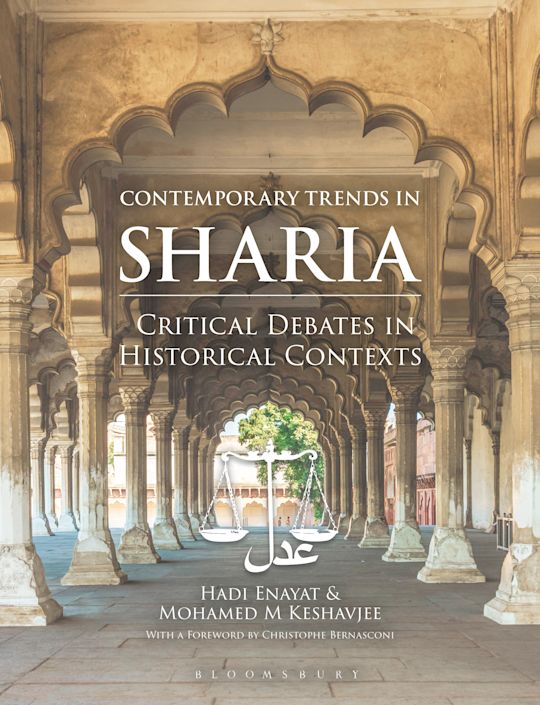

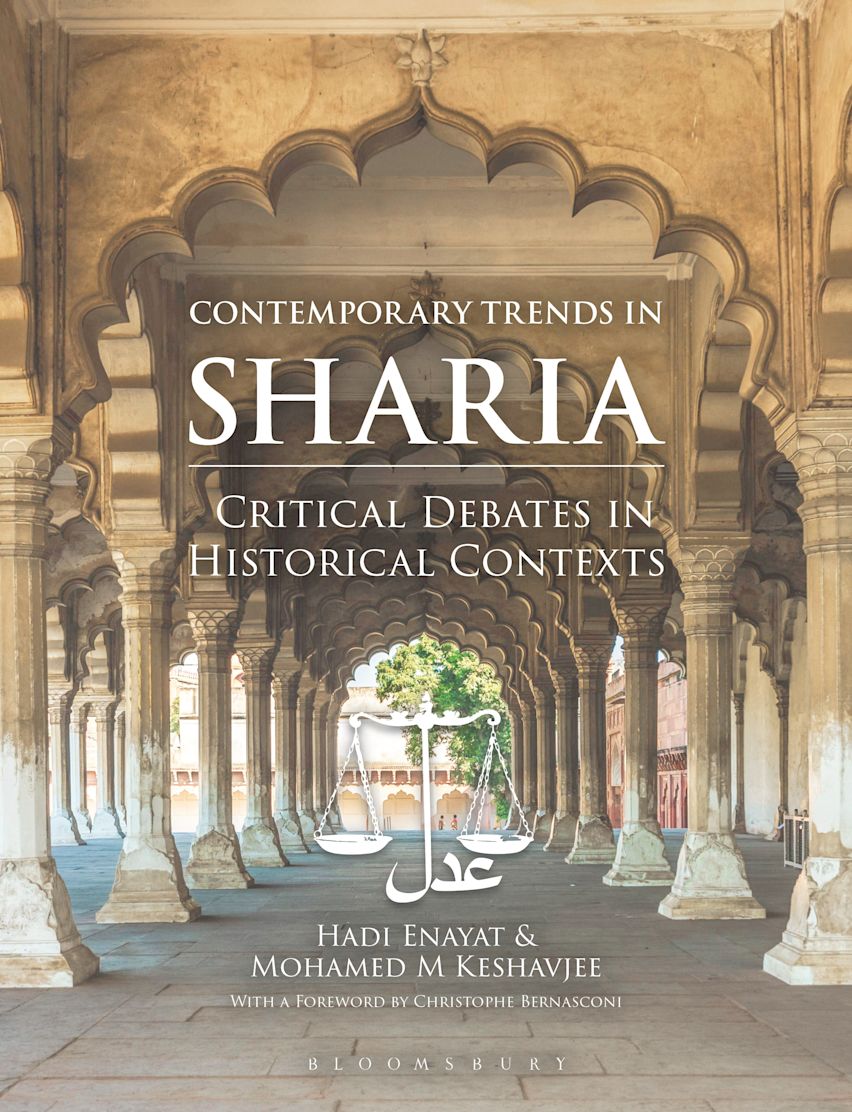
Contemporary Trends in Sharia
Critical Debates in Historical Contexts
- Open Access
Buying pre-order items
Your pre-order item will usually be processed for shipping shortly before the publication date.
Payment for this pre-order will be taken when the item becomes available
- Delivery and returns info
-
Free CA delivery on orders $40 or over
Description
This open access reference book is a critical analysis of sharia for the 21st century. It serves as a critical introduction to a modernist, progressive and neo-traditionalist perspective on Islamic thought and practice regarding sharia. This approach reflects the efforts undertaken by Muslims - particularly those in the diaspora - to forge an alternative Muslim modernity based on creative engagement with both Islamic tradition and modern Western forms of knowledge. The book highlights the ground-breaking work of some of these seminal thinkers in various fields of law.
The book is divided into thirteen chapters. It first covers what sharia is, its origins and how it developed in real time for Muslim societies. This discussion is then followed by chapters on each of the most challenging subjects of Islamic law in the contemporary world, including: constitutionalism, human rights, gender justice, biomedical ethics, religious freedom, criminal law, economics and finance and property rights. Each of these themes is discussed by the co-authors in light of the state-of-the-art literature available, each topic's individual history, and the current debates and diverse global case studies that relate to each theme. The aim is to highlight that there is no monolithic version of sharia. Rather, sharia is an active set of humanistic principles that inspires Muslims around the world to live according to the ethics of their faith.
The book is a collaboration by two experts from different professional backgrounds and aims to take a panoramic view of the subject to appeal to a wide audience. Each chapter can be read 'stand alone' while contributing to the book's broader framework. All together, the chapters challenge misconceptions about sharia and showcase the developments surrounding sharia in the Muslim world and within the Muslim diaspora.
The ebook editions of this book are available open access under a CC BY-NC-ND 4.0 licence on bloomsburycollections.com. Open access was funded by The Institute of Ismaili Studies.
Table of Contents
Preface
Foreword by Christophe Bernasconi
Acknowledgements
Abbreviations
Introduction
Chapter 1: Sharia: Its Origin, Evolution and Multiple Interfaces in the History of the Muslim Peoples
Chapter 2: Islamic Constitutionalism and Its Discontents
Chapter 3: Secularism, Religious Freedom and the Sharia
Chapter 4: Criminal Justice in Islam
Chapter 5: Gender Justice: The Rights of Women in Islam – A Need for New Hermeneutics and a New Epistemology
Chapter 6: Alternative Dispute Resolution (ADR) and the Politics of Informal Justice
Chapter 7: Sharia and Human Rights: The Clash of Universalisms and the Search for Common Ground
Chapter 8: The Quest for a Moral Economy and the Vital Role of Faith and Sharia-Inspired Finance
Chapter 9: Property Rights in Sharia: Between Social Justice and Pious Neoliberalism
Chapter 10: Muslims and Bioethics – Developments in the Field of Organ Donation and Transplantation under Sharia
Chapter 11: Continuity and Innovation in the Islamic Law of Jihad: Modernity and the Crisis of Political Authority
Epilogue
Bibliography
Product details

| Published | Aug 20 2026 |
|---|---|
| Format | Hardback |
| Edition | 1st |
| Pages | 464 |
| ISBN | 9780755657940 |
| Imprint | Bloomsbury Academic |
| Dimensions | 246 x 189 mm |
| Publisher | Bloomsbury Publishing |
Reviews
Related Titles